
Tips for Successful Shore Diving in British Columbia
Jenessa Greenough Sep 13, 2026
IDC Archive Feature | Published April 26, 2013 | By Jenessa Greenough
Local Insight & Essential Strategies for Pacific Northwest Shore Divers
Depending on where you received your basic open water scuba certification and completed your first ocean, lake, or quarry dives, diving from shore may—or may not—seem intuitive to you. For divers who began their underwater journey primarily from charter boats, it can feel a little daunting to simply gear up on the beach and stride into the surf or off a rocky pier.
Shore diving requires careful consideration of several variables that aren't typically a concern on boat dives. Below, we’ve outlined the core strategies for planning a safe, stress-free shore dive along our local coastline.
1. Water & Surface Conditions
Whether diving from a boat or shore, you should always evaluate current water conditions before stepping in. When shore diving, factors such as strong surface currents can severely impact your ability to safely return to your planned exit point. Understanding local tides and tidal exchange currents is essential for avoiding exhausting or hazardous surface swims.
In addition to tides, divers must evaluate visibility, surf action, and water temperature:
Managing Warm Weather & Heat Exhaustion
Keeping warm both in and out of the water is critical during winter, requiring proper exposure protection. However, during British Columbia’s warm summer months, shore divers face the opposite risk: overheating and heat stroke.
- Stage heavy tanks and gear as close to the water entry point as possible before donning drysuits or thick wetsuits.
- Complete your buddy check, review your dive plan, and configure accessories before zipping up exposure suits.
- Stay well-hydrated throughout the day.
- Choose entry points with minimal walking distances during hot weather to minimize time spent fully suited up on land.
Wind and Wave Action: Local coastline geography plays a huge role in shore diving safety. Metro Vancouver and Howe Sound feature complex, rocky coastlines facing various directions. Depending on wind direction, some sites offer total protection, while others experience heavy surf, poor surface visibility, and shallow surge. Choosing a sheltered shoreline based on current wind forecasts is key to a smooth dive.
2. Know Your Entry & Exit Points
Unlike boat diving—where a captain or skiff can pick up divers wherever they surface—shore diving requires strict adherence to designated exit points. Diving in Howe Sound means exploring a dramatic fjord characterized by steep granite walls, cliffs, and occasional gravel beaches.
Some sites, like Whytecliff Park, offer forgiving gravel beaches with multiple nearby exit options. Other sites have strictly defined exits. Some advanced divers even plan one-way drift dives or DPV (diver propulsion vehicle) runs from one specific entry beach to a separate exit point downstream.
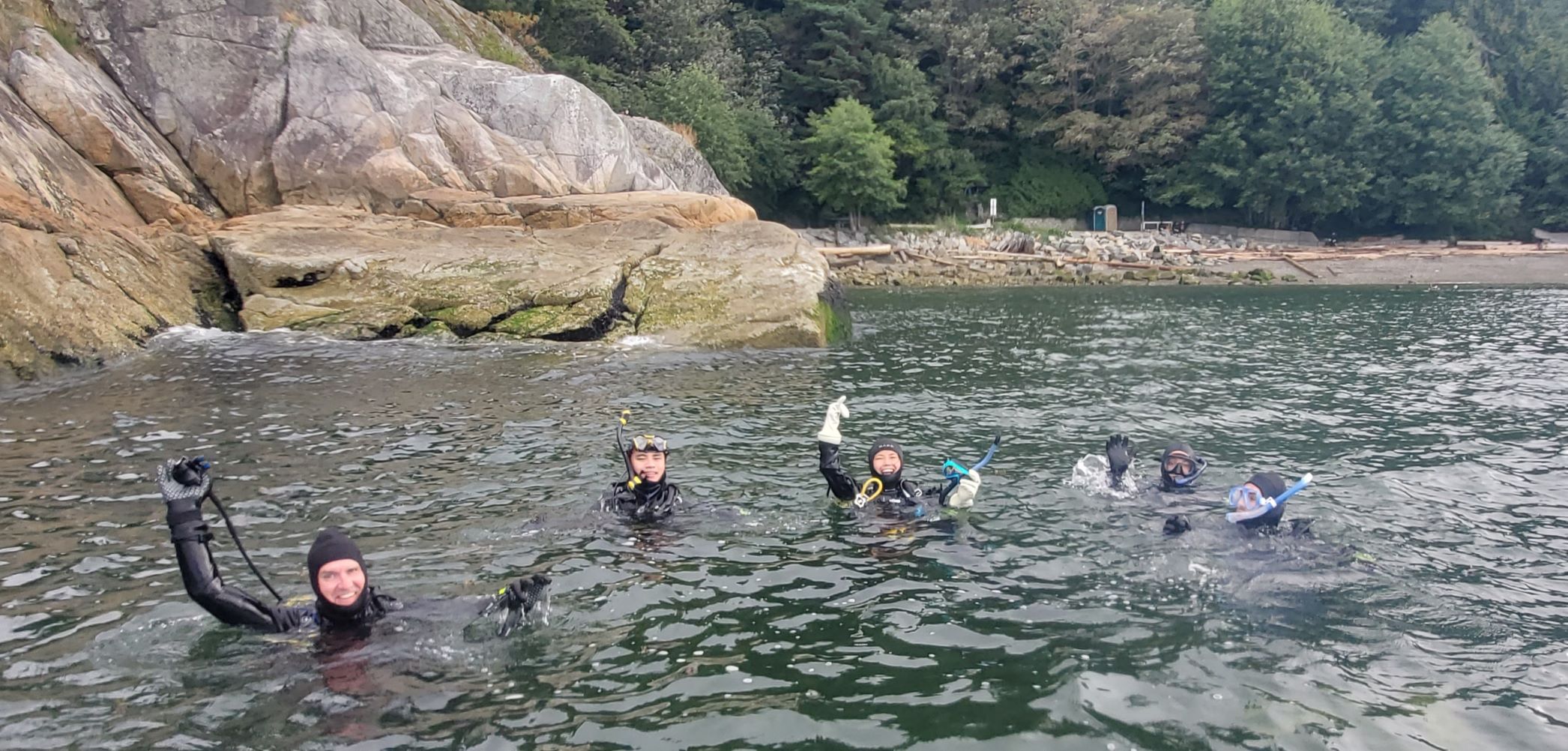
Pro Tip: Always conduct a land-based inspection of your entry point before gearing up. Dynamic water action can wash massive logs or driftwood onshore, blocking standard entry paths. Always evaluate how easy an exit will be when wearing 60+ lbs of heavy cold-water gear.
Check Parking Regulations: Don't forget local parking rules! The last thing you want after surfacing from a rewarding dive is discovering your vehicle—holding your dry clothes, phone, and keys—has been towed.
3. Underwater Topography & Hazards
Without a boat captain briefing you on bottom contour or sonar readouts, shore divers must rely on pre-dive research. Local guidebook classics, such as 151 Dives by Betty Pratt-Johnson, detail underwater topography, reef structures, and navigation bearings.
Understanding underwater contours helps you set appropriate maximum depth limits, calculate gas consumption, avoid unwanted decompression, and easily locate points of interest. At current-prone wall sites, underwater topography can create vertical upwellings or downwellings—requiring close monitoring of depth gauges and buoyancy control.
4. Personal Fitness & Physical Limitations
Shore diving demands more physical energy than boat diving, particularly in cold water where heavy exposure suits and extra ballast weight are required. Many Pacific Northwest shore sites require hiking down steep trails or negotiating slippery cobble rocks while carrying full gear.
- Pace Yourself: Avoid overexertion land-side to prevent physical fatigue or rolled ankles on rocky beaches.
- Sturdy Footwear: Wear heavy-duty neoprene boots with thick vulcanized soles for ankle support and traction on wet kelp and rocks.
- Surface Swims: Sites like Porteau Cove require long surface swims out to marked buoy descent points. Account for surface currents and pace your kick-cycle to conserve energy for the dive itself.
5. Essential Shore Safety & Surface Visibility
When shore diving, buddy teams are fully self-sufficient. You are responsible for bringing your own emergency safety gear, including emergency oxygen, first aid kits, cell communications, and a well-stocked "Save-a-Dive" spare parts kit.
Boat Traffic Awareness: While some local sites lie within Marine Protected Areas (MPAs) closed to boat traffic, many popular shore sites share waterways with recreational boaters and commercial traffic.
Surface Signaling Best Practices
Always carry a deployable Surface Marker Buoy (SMB) and spool. Deploying an SMB during your 3-minute safety stop alerts nearby boaters to your position before you surface and gives you a visual reference point during your ascent.
Join Us for Local Fun Dives!
Want to learn local shore entry tactics firsthand? Joining organized fun dives with International Diving Centre in Vancouver is a great way to get site orientations, build a strong diving community, meet active dive buddies, and explore the best of BC shore diving safely.
Have questions about local shore entries or gear recommendations? Stop by our showroom at 2865 West Broadway or call our team today!