
You’ve planned the trip, paid for the charter, and driven two hours to the dock. You pull your mask over your head—and snap. The strap tears right in half. Or worse, a small leak threatens to derail your entire dive day before you even get in the water.
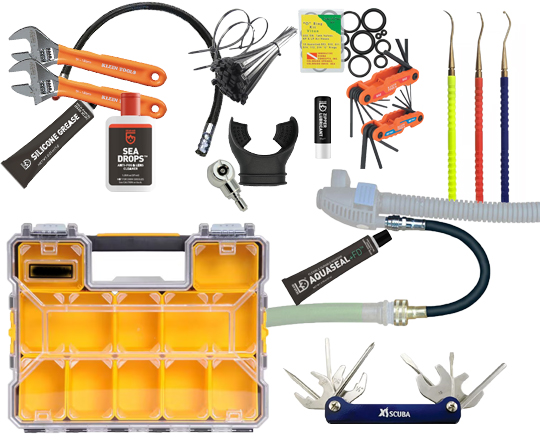
Being a confident, self-reliant diver means being prepared for the unexpected. Carrying a well-stocked Save-a-Dive (SAD) kit isn't just about carrying extra tools—it's about understanding how your equipment works, preventing avoidable failures, and continuing your diving education. Here is your complete guide to assembling a field-ready kit and taking your equipment maintenance skills to the next level.
1. Smart Storage & Essential Tool Care
How you store your Save-a-Dive kit is just as important as what’s inside it. On a crowded boat or shore site, quick access and moisture management are key:
- Choose an Organized Dry Case: Store your gear in a high-impact, O-ring sealed hard case or a water-resistant zip pouch with internal dividers. Structured compartments keep small items—like O-rings, air spools, and picks—from getting lost, allowing you to grab exactly what you need in seconds.
- Keep Your Gear Dry: A watertight seal protects your tools from salt spray and deck splash, ensuring your replacement parts stay clean and corrosion-free until you need them.
- Crucial Post-Dive Care (Rinse & Dry): Salt air and spray will corrode even high-grade stainless steel tools over time. Whenever you open your kit near the water or use a tool on site, rinse it thoroughly with fresh water and let it air-dry completely before sealing the case back up. Storing damp tools inside an airtight box traps humidity and speeds up rust!
2. Essential Multi-Tools, Dual Wrenches & Hex Keys
Field repair is all about having the right leverage without stripping fittings or twisting hoses:
- Two Open-End Wrenches (or Dual Slim Adjustables): Carrying two wrenches is essential for hose maintenance. You need one wrench to hold the first-stage port or hose crimp stationary while using the second wrench to turn the fitting nut. A single wrench often leads to a twisting hose or damaged threads.
- Complete Hex Key Sets (Both Metric & Imperial): Never rely on a single fold-out set. Scuba gear manufacturers are split—North American brands frequently use Imperial (SAE) hex sizes for port plugs and valve stems, while European and Asian gear uses Metric. Carrying compact sets for both ensures you can remove HP/LP port plugs or adjust first stages on any brand.
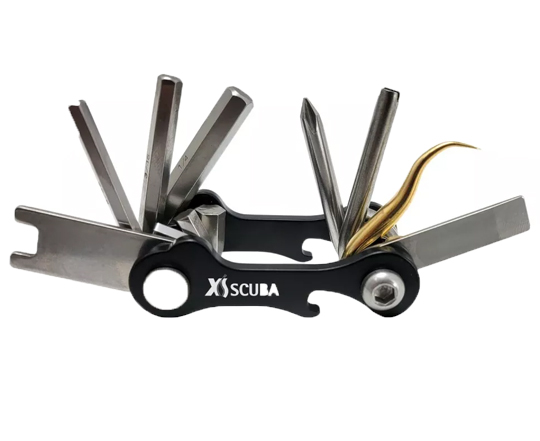
- Scuba Multi-Tools: For quick, light-duty adjustments, multi-tools like the XS Scuba Multi-Tool or O-Ring Pick Set give you thin-profile wrenches, hex drivers, and screwdrivers in one compact body.
- O-Ring Picks (Brass or Plastic Only): Never use steel dental picks or pocket knife tips to extract O-rings! Steel scratches brass regulator bodies and valve seats, creating micro-grooves that cause permanent air leaks. Stick to softer metals or plastic, such as a 3-piece brass pick set or a quick-grab tank keychain with a pick.
- Specialty Servicing Tools: If you like doing quick BCD, power inflator, or valve maintenance on-site, keep dedicated gear like the Highland Inflator Tool in your pouch.
3. Spare Hoses, Mouthpieces & Wearable Parts
Rubber and silicone degrade quickly when exposed to sunlight, salt spray, and extreme pressure changes. Always carry backups for these high-wear failure points:
| Category | Key Items to Pack | Technical Insight |
|---|---|---|
| Spare Mouthpiece | Standard or moldable silicone mouthpiece | Heavy biters can chew through a regulator mouthpiece mid-dive, leading to constant water leaks. Swapping it takes less than 2 minutes with a zip tie. |
| Fin Straps | Backup rubber fin strap or universal spring straps | Rubber and silicone fin straps split under tension at the heel post. Upgrading to spring straps or carrying a universal backup prevents getting stranded on the boat. |
| Mask Straps | Spare silicone mask strap or neoprene slap-strap | Micro-cracks in silicone snap without warning right as you put your mask on. |
| Low-Pressure (LP) Hoses | Spare LP BC Inflator Hose & Regulator Hose | LP hoses operate at ~140 psi above ambient. An aged hose can bubble or split near the crimp fittings; carrying a standard replacement saves the day. |
| High-Pressure (HP) Hoses | Spare HP Gauge Hose & Air Spool | HP hoses carry full tank pressure (~3000+ psi). Always pack a spare swivel air spool with dual O-rings—a leaking SPG swivel is one of the most common hose failures. |
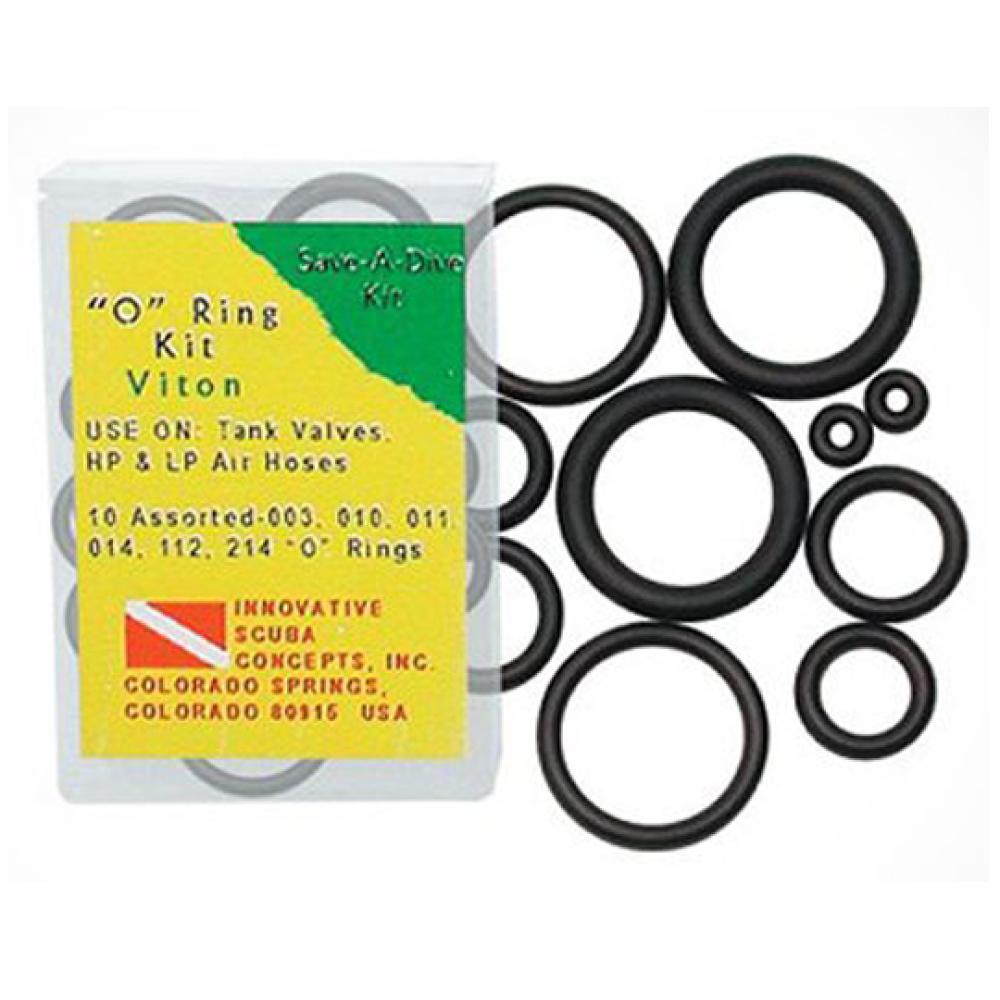
| O-Rings | Viton O-Ring Kit | Tank valve O-rings (AS568-014 for yoke) are the #1 failure point on dive boats. Carry Viton O-rings—they are durable and safe for Nitrox/EANx mixtures up to 100% O₂. |
4. Plastic Cable Ties (Zip Ties): The Ultimate Quick-Fix Tool
If there is a single most important item in a dive repair kit, it’s a handful of heavy-duty plastic zip ties. They weigh almost nothing, cost cents, and solve dozens of gear emergencies on the boat:
- Securing Regulator Mouthpieces: The standard way to fasten a mouthpiece to a second stage is a small zip tie. If yours breaks or slips, your regulator is unusable without one.
- Fixing Loose Hoses & Accessories: Secure dangling console hoses to D-rings, lock dive knives to sheath mounts, or attach backup lights.
- Emergency Boot & Fin Fixes: Can be threaded through torn fin strap eyelets or pulled through wetsuit boot zipper pulls if the slider tab breaks.
Tip: Keep a mix of 4-inch (thin for mouthpieces) and 8-inch (thick for structural fixes) UV-resistant black nylon zip ties in your kit, along with a small pair of wire cutters to snip the tail flush so it doesn't scrape your skin.
5. Multi-Use Hacks: The Scuba Tire Inflator Adapter
Did you know your scuba tank can double as a portable off-grid air compressor? One of the smartest, most versatile additions to any Save-a-Dive kit is an LP Tire Inflator Adapter.
- Plug-and-Play Design: One end snaps directly into your standard low-pressure BCD inflator quick-disconnect hose, while the other end locks onto a standard tire Schrader valve.
- Roadside & Boat Ramp Lifesaver: Return to the parking lot or boat launch with a flat tire on your vehicle, truck, or boat trailer? Connect this adapter to a tank with remaining air to top off your tires in seconds without waiting for a tow truck or hunting for a gas station air pump.
- Shore Dive Essential: Great for inflating bike tires, trailer tires, or heavy-duty beach transport carts directly at the dive site.
6. Maintenance, Lubricants & Post-Trip BCD Care
To make your equipment last and guarantee it's ready for your next dive, taking time for post-dive maintenance is a must—especially after returning home from a tropical vacation where the warm ocean water often has a higher salt content.
- Warm, Soapy Rinse for Hard-to-Reach Crannies: When returning from a dive trip, soak your gear in warm, mild soapy water. Warm water dissolves stubborn salt crystals trapped in deep nooks and crannies—like valve threads, regulator swivels, and suit zippers—that quick cold-water rinses leave behind.
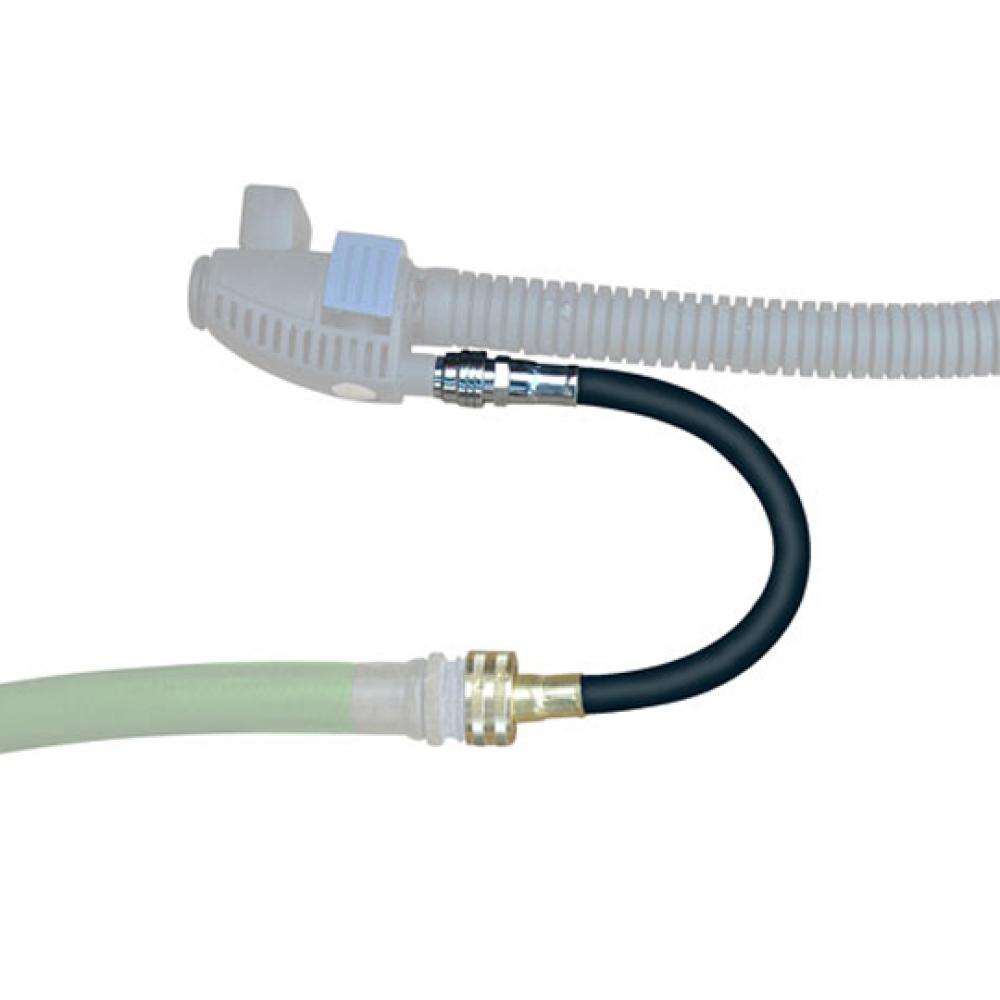
- Flush the BCD Internal Bladder: Saltwater gets inside your BCD bladder every time you dump air underwater. Using the XS Scuba BC Flush Hose with Inflator Adapter allows you to snap a standard garden hose directly onto your BC power inflator mechanism. This fills the inner bladder with clean fresh water in seconds, making it simple to swish, flush out internal salt crystals, and drain through the dump valves.
- Prevent Mold & Bacteria Growth: To sanitize the inside of your BCD and eliminate mold, mildew, or invasive organisms picked up on vacation, add a quarter capful of standard household bleach (or dedicated BCD conditioner) into the flushing water. Swish it around inside the bladder, let it sit briefly, rinse thoroughly with fresh water, and inflate the BCD partially to dry internally.
- Defog & Lens Care: Keep a concentrated formula like Gear Aid Sea Gold Anti-Fog Gel on hand for clear visibility on every dive.
- O-Ring & Seal Lubrication: Keep your rubber O-rings hydrated and sealing cleanly with a compact tube of Gear Aid Silicone Grease. A light coat stops dry rot and protects camera housing or flashlight seals.
- Adhesives & Zipper Care: For minor suit punctures, carry flexible field adhesives like Gear Aid Aquaseal +FD Repair Adhesive. Keep drysuit and heavy gear bag zippers gliding smoothly with Gear Aid Zip Tech Zipper Stick.
Take Your Education Further: The PADI Equipment Specialist Course
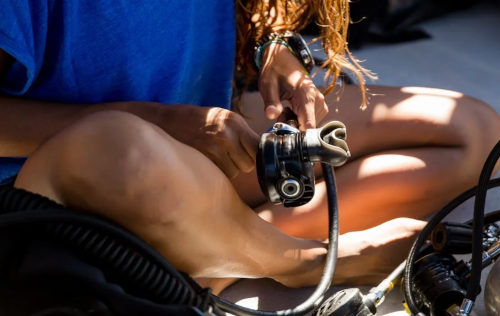
Carrying the right tools is a great first step, but real confidence comes from understanding the gear itself. Knowing how your regulators, valves, and BCDs function internally gives you the skill to diagnose minor issues, perform safe field maintenance, and protect your investment for years to come.
If you are in the Vancouver area or diving along the West Coast of British Columbia, the best way to master gear care is by taking the PADI Equipment Specialist Specialty Course at International Diving Centre.
What You'll Learn:
- Hands-On Maintenance: Taught directly by a technician with over 30 years of hands-on scuba repair and service experience, you’ll learn the inner workings of regulators, valves, BCD inflator mechanisms, and drysuit seals.
- Pro Field Repairs: Learn how to perform field adjustments safely without damaging internal components or voiding gear warranties.
- Equipment Care & Storage: Discover professional techniques for long-term storage, corrosion prevention, and extending the life of your equipment.
Whether you dive locally in the cold waters of the BC coast or travel worldwide, this course ensures you never have to sit out a dive over a preventable gear issue!