Why Do I Need a Course to Rent or Dive in a Drysuit?
Royse Jackson Jul 30, 2026
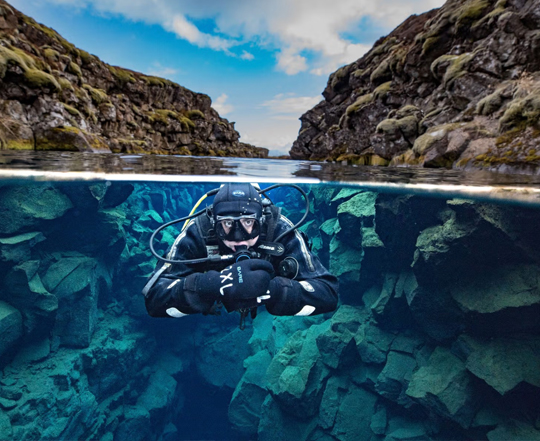
Feeling the chill of our temperate waters (or similar conditions around the world) many certified divers want to trade up from a wetsuit and dive in a drysuit. However, some are surprised to learn that it is not as easy as walking into their local dive shop and renting one to try out on their own. Most dive shops will require you to have either a drysuit specialty cert or some evidence (logged dives, training records, etc) of training and/or experience before renting you a drysuit. There are a few things to learn, but the primary reason is that a drysuit is an enclosed air space around your body and as such it affects your buoyancy in ways that a wetsuit does not. The undergarments you wear and the air space in the drysuit are what keep you warm underwater. As a diver descends and water pressure increases, the volume of that air space will decrease if we do not add air to compensate for this. Likewise, when the diver ascends the air added to the suit at depth expands. So, just as with a BCD one must adjust the air in the drysuit as depth changes. However, this is primarily for comfort (preventing squeeze & having enough air space to provide insulation) and the BCD is still meant to do its job. This means that the diver is now controlling 2 buoyancy systems which can add to task loading during times like descents when a diver is also managing their equalization, keeping track of teammates, possibly accounting for navigation and more. A profile with some depth changes (even just those that account for uneven topography) can be a bit more complicated diving in a drysuit. Getting used to venting and adding air can take a little bit of time. Anticipating buoyancy changes and making adjustments at the right time takes practice. When slow to do this the large space that air can travel through (and expand within) in a drysuit can make it difficult at times to get the exhaust valve (usually found on the upper arm) to the highest position. Additionally, learning how to get your feet underneath when they fill with air is no easy feat. There are a couple techniques that are best seen, demonstrated and practised in a shallow, controlled environment (like a pool) before tackling them for real. Runaway ascents are potentially dangerous; therefore it is prudent to have the skills to stop one before it starts. Aside from the buoyancy control aspects of a drysuit course, divers also learn a bit about how to handle, care for and choose a drysuit as a piece of equipment. When diving in cold water your drysuit becomes an essential piece of your gear. It does require some regular maintenance, has replaceable parts and can be relatively easily damaged if improperly cared for. So some simple tips and techniques go a long way. The range of types (designs, materials, brands) of drysuits and available options is seemingly endless. Other equipment may need to be reconfigured to accommodate drysuits as well. The course should include some brief information about fins and weighting in regards to drysuit diving. If bucket-list cold-water destinations are on your radar, having a formal drysuit certification isn't just recommended—it's strictly mandatory. For instance, diving the famous Silfra Fissure in Iceland allows you to dive directly between the North American and Eurasian tectonic plates in crystal-clear 2°C–4°C glacial water. Because of the extreme environment, local park regulations and dive operators strictly enforce that all divers present an official Drysuit Specialty certification (or proof of at least 10 logged drysuit dives within the last two years) before entering the water. Getting certified locally before your trip ensures you won't miss out on world-class dives like Silfra due to paperwork or lack of training. For details on booking excursions and local guidelines, check out Icelandia's Silfra Diving Tours. Drysuit courses are relatively short and affordable as far as specialty courses go and one of the most beneficial if you’re going to be diving cold water. However, there are also ways to complete drysuit training in your Open Water and Advanced Open Water courses (usually with an upgrade fee). Over the years, we have trained countless divers through our PADI Drysuit Specialty course, and the feedback is overwhelmingly positive. Gaining confidence in a drysuit breaks down the barrier to cold-water diving, unlocking the ability to stay warm, comfortable, and active exploring the stunning aquatic life of the Pacific Northwest coast all year round.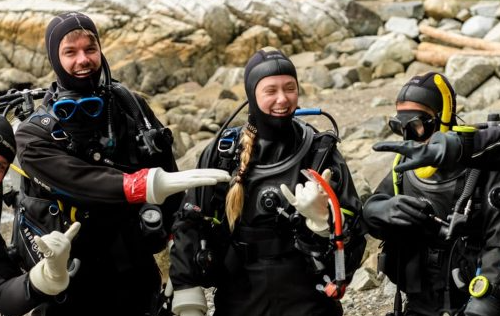
Why is this?
During the dive
Bucket-List Destinations Require Certification (e.g., Silfra Fissure, Iceland)
What courses are available for drysuit training?