
Scuba dive travel insurance, top 3 things to remember
Jenessa Greenough Sep 24, 2026
Published by Jenessa Greenough | Updated for Current Travel Standards
Planning a tropical getaway or an upcoming group dive trip? Many people learn to dive specifically for an upcoming warm-water vacation. Whether you are a brand new diver or an experienced underwater photographer joining our International Diving Centre Group Trips, there is one crucial detail that is frequently overlooked: Scuba Dive Travel Insurance.
Diving adds an unforgettable dimension to any vacation experience, but remote locations and specialized medical care require proper preparation. Here are the top three things every diver needs to remember about dive travel insurance before stepping onto the boat.
1. Always Read the Fine Print of Standard Travel Insurance
Most travelers know they should carry general travel medical insurance when venturing abroad for financial safety. However, many standard policies explicitly exclude "hazardous activities"—a category that almost always includes recreational scuba diving.
If you incur a diving injury—or even a non-diving injury while on a dive boat (such as slipping on a wet deck and breaking a wrist)—a standard policy may deny your claim completely.
- Dedicated Scuba Insurance is Affordable: Carrying secondary insurance tailored specifically for diving is remarkably inexpensive and can save you tens of thousands of dollars in emergency hyperbaric chamber or evacuation fees.
- Cross-Border Note for Canadians: Even if you are taking a quick day trip south of the border to dive in Washington State or Oregon, Canadian provincial health plans will not cover out-of-country hyperbaric treatments or emergency medical transport.
2. Protect Your Trip Investment and Your Dive Gear
Dive vacations often involve significant upfront costs, including liveaboard deposits, resort packages, and non-refundable flights. Comprehensive dive travel insurance helps protect your financial investment on two major fronts:
- Trip Cancellation & Interruption: Coverage can reimburse lost deposits if an illness, injury, or weather event forces an operator cancellation—or prevents you from departing in the first place.
- Gear Coverage: Scuba equipment is a major financial investment. Because heavy gear like regulators, dive computers, and cameras rarely fit entirely into airline carry-on luggage, lost or stolen checked baggage can result in severe financial loss. Upgrading your policy to cover lost or damaged gear is well worth the peace of mind.
3. Know Your Limits & Rely on Specialized Dive Networks (Like DAN)
If you already hold travel insurance through an employer or credit card, review the policy parameters carefully. Pay close attention to depth limits and activity definitions:
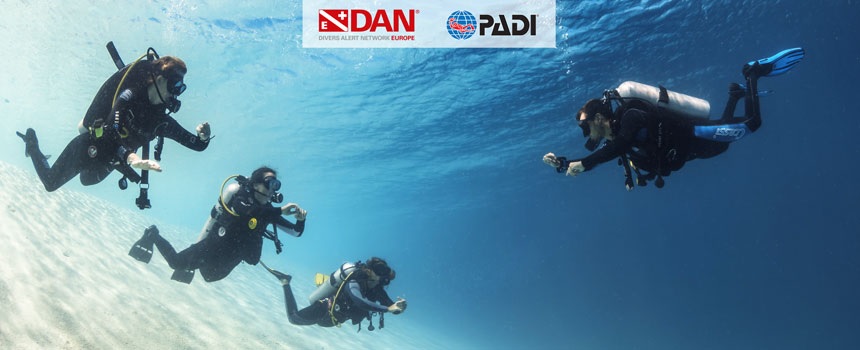
Divers Alert Network (DAN) offers specialized medical coverage and worldwide emergency assistance tailored for divers.
Watch Out for Technical Exclusions: Even policies that cover basic recreational diving often exclude overhead environments (cave, cavern, or wreck penetration), solo diving, or technical diving with trimix/decompression gases.
The Gold Standard: Divers Alert Network (DAN): For reliable, hassle-free protection, we strongly recommend DAN (Divers Alert Network). DAN offers specialized dive medical insurance, optional gear riders, and a worldwide 24/7 emergency response network capable of coordinating complex air evacuations in remote areas.
Ready for Your Next Underwater Adventure?
Diving creates some of the most extraordinary memories of a lifetime, and ensuring you are fully protected lets you focus entirely on enjoying the marine environment.
Looking to join a community of passionate local divers on our next tropical or local getaway? Check out our upcoming International Diving Centre Group Trips, or visit our Vancouver shop at 2865 West Broadway to make sure your gear is serviced and ready to fly!