
Saying Goodbye to the Suunto Zoop & Vyper Series
Royse Jackson Sep 16, 2026
End of an Era: Saying Goodbye to the Suunto Zoop & Vyper Series
Every so often, the scuba diving world reaches a landmark turning point where iconic gear hands over the torch to a new generation. With Suunto officially discontinuing the popular Zoop Novo and Vyper Novo earlier this year, we are witnessing the end of one of the most successful entry-level product lines in diving history.
For decades, if you walked onto a dive boat in Howe Sound or asked a newly certified student at International Diving Centre what computer they were wearing, there was an overwhelming chance it was a rugged puck strapped to their wrist bearing the Suunto name. Let’s take a journey through the complete lineage of these foundational dive computers, examine why the market is shifting, and look at where dive tech is heading next.
The Evolution: Favor, Gekko, Zoop, and Zoop Novo
To truly appreciate why the end of the Zoop line is such a historic milestone, you have to look at the family tree of entry-level dive computers that made digital decompression monitoring accessible to millions of recreational divers worldwide:
- The Suunto Favor (1990s–2000s): The granddaddy of them all. The Favor was a classic, vintage air-only dive computer widely loved by recreational divers. With its straightforward price point and bulletproof reliability, it helped thousands transition away from manual dive tables into digital multi-level diving.
- The Suunto Gekko: Positioned between the Favor and the original Zoop, the Gekko introduced the classic three-button layout, Nitrox support (up to 50% O2), a conservative Suunto RGBM algorithm, and a torch-charged phosphorescent screen inside a dark grey housing. It was virtually indestructible.
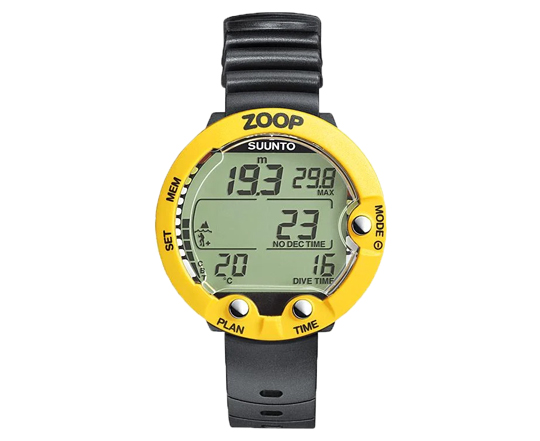
- The Original Suunto Zoop: Swapping the Gekko's dark grey casing for bright, unmistakable colors (like neon yellow), the original Zoop was effectively a refreshed rebrand of the Gekko. It quickly became the ultimate global choice for new divers and rental fleets due to its simple 3-button navigation, Air/Nitrox/Gauge/Free modes, and easy-to-read luminescent display.
- The Suunto Zoop Novo & Vyper Novo: Serving as our most popular entry-level dive computer for nearly a decade, the Zoop Novo modernized the classic puck design. It upgraded to an intuitive four-button interface matching Suunto's D-series, added a crisp segment/matrix display with a built-in electronic backlight, and offered expanded freediving and bottom-timer modes.
A Decade of Reliability: What Made the Zoop Series Special
Whether it was an original 3-button unit or the 4-button Zoop Novo, these dive computers were legendary for key reasons:
- Conservative Safety: Powered by the continuous Suunto RGBM decompression model.
- Ease of Use: Logical button menus that required zero guesswork before a dive.
- Robust Durability: Heavy-duty, impact-resistant housings that withstood harsh cold-water environments.
- User-Maintainable: Simple user-replaceable batteries that kept units running for years.
Why the Industry is Moving Away from Coin-Cell Batteries
One of the biggest questions divers ask is why manufacturers are moving away from traditional user-replaceable CR2450 coin-cell batteries in favor of sealed, rechargeable Lithium-ion systems. The reason comes down to power demands, screen technology, and long-term reliability:
- Vibrant Color Screens Require More Juice: Modern AMOLED displays, fast processors, wireless tank pressure integration, and Bluetooth syncing draw significantly more power than old monochrome LCD segment screens. A small CR2450 coin battery simply cannot deliver enough power to drive a bright color display in cold Pacific Northwest waters without draining almost immediately.
- Eliminating Flood Risks: The leading cause of flooded dive computers has always been user error during battery swaps—pinched O-rings, trapped hair or sand, or overtightened battery doors. Factory-sealed housings remove this risk entirely.
- Fast, Non-Proprietary Charging: With quick-charge capabilities and non-proprietary magnetic or USB chargers, divers no longer need to hunt for specialized batteries or O-ring kits before a dive trip. A quick 20-minute surface interval charge off a USB power bank gives you more than enough juice for your next dive.
Where Suunto is Going: The Next Generation of Dive Tech
Suunto isn't stepping away from entry-level and technical diving—they are completely redefining it. Their new strategy pivots heavily toward high-contrast color displays, customizable Bühlmann 16 GF algorithms, wireless air integration, and multi-sport versatility, splitting into two distinct paths:
1. Multisport & Wrist-Style Divers
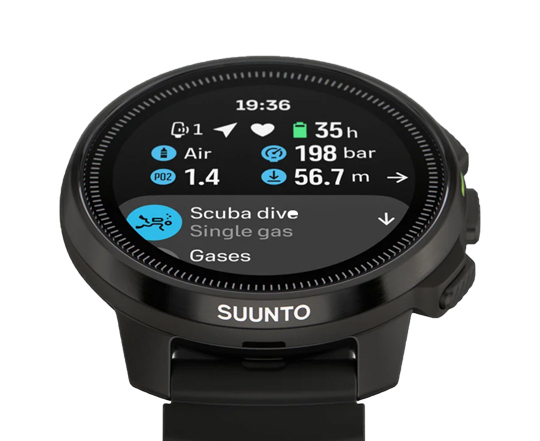
To compete directly with hybrid lifestyle/dive smartwatches like the Garmin Descent Mk3i, Suunto introduced the Suunto Ocean and the sleek Suunto Nautic S. Designed as a compact, daily-wear wrist computer featuring a brilliant AMOLED display, built-in GPS, offline mapping, and up to 60 hours of dive battery life, it transitions seamlessly from everyday life to advanced scuba and freediving.
2. Dedicated Heavy-Duty Tech & Console Computers
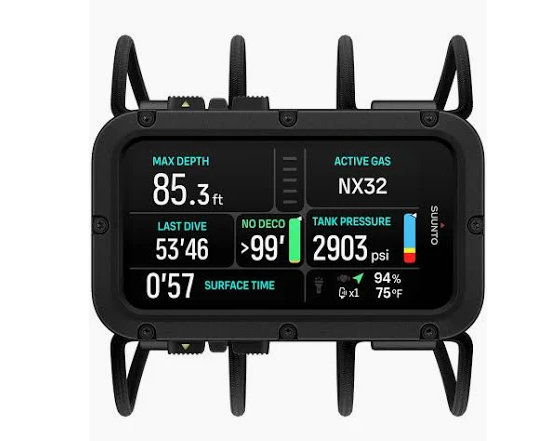
For divers who prefer a dedicated, glove-friendly console or arm-mounted display to rival tech giants like the Shearwater Perdix 3 or Shearwater Peregrine TX, Suunto released the Suunto Nautic Bungee. Built with a rugged, leak-proof housing, an integrated LED flashlight, bungee mounting, and an incredible 120 hours of continuous dive tracking on a single charge, it's designed for serious cold-water, wreck, and decompression exploration.
Something Big is Coming Next Month...
The dive computer market isn't stopping here. New computers are coming down the line from across the industry, and Oceanic has an awesome new computer launching next month that is guaranteed to make the competition sit up and take notice! While we are sworn to secrecy and cannot divulge specific details just yet, keep an eye on our website and social channels—we will share full specs, photos, and pre-order availability the second the embargo lifts!
Suunto Service & Battery Replacements at IDC
If you still rely on a classic user-replaceable Suunto computer, International Diving Centre has you covered. As an official Suunto L1 Battery Repair Facility, our trained technicians can change out batteries, replace hatch seals, and perform pressure testing on most classic Suunto models—including the D-series (D4i, D6i, D9, etc.), Favor, Gekko, Zoop, and Zoop Novo.
Note on Rechargeable Units: Due to factory sealing standards, any of the newer rechargeable Suunto models (such as the Suunto EON, D5, Ocean, or Nautic series) cannot be serviced in-shop and must be sent directly to Suunto's regional service hub for battery maintenance or repairs.
Need Battery Service or Ready to Upgrade?
Bring your classic Suunto in for certified L1 battery service, or stop by our Vancouver showroom to test out the newest color-screen dive computers in person!
Visit us at 2865 West Broadway, Vancouver | Call (604) 736-2541 | diveidc.com